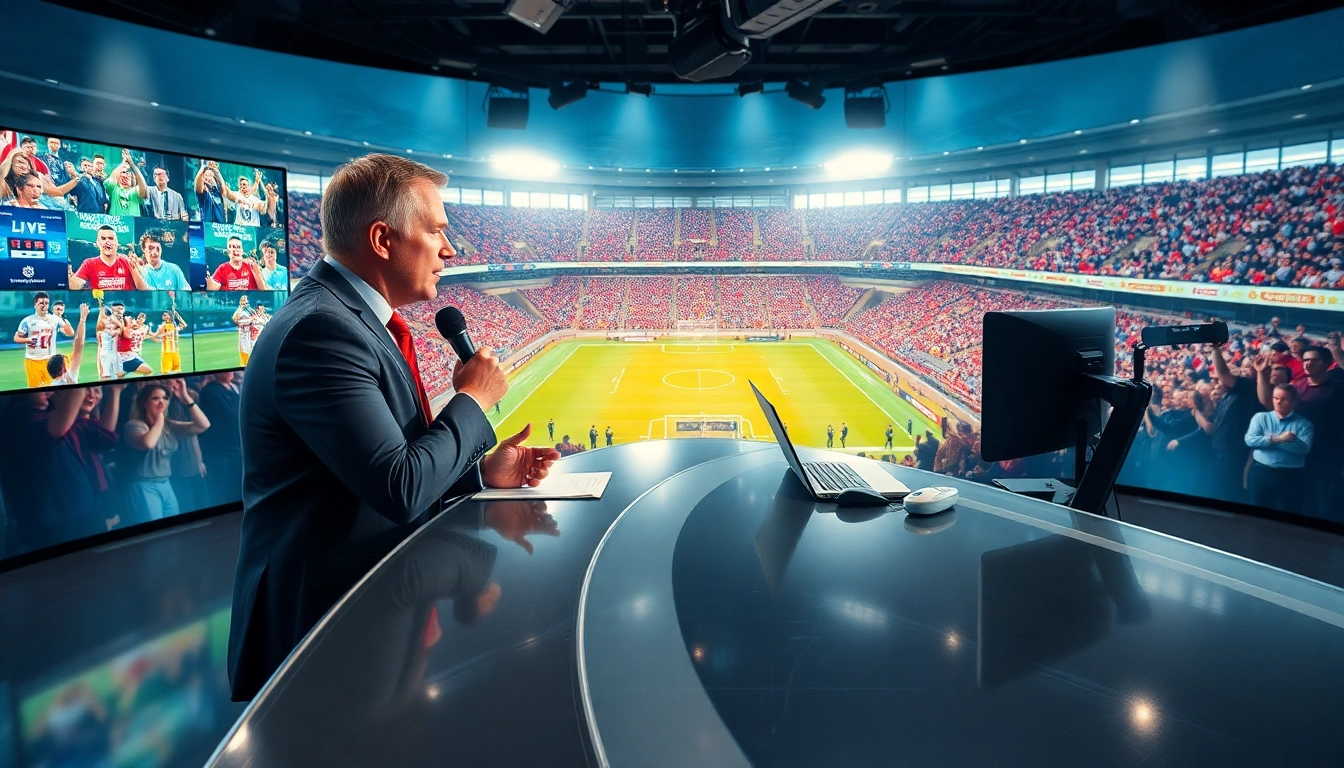
Understanding the Basics of Sports Broadcasting
Definition and Significance of Sports Broadcasting
Sports Broadcasting is the dissemination of live and recorded sports events to audiences through various media channels. It plays a crucial role in sports culture, allowing fans to engage with their favorite teams and players from anywhere in the world. This vital industry combines elements of journalism, entertainment, and technology, answering the rising demand for experience-rich content while building successful economic models.
The significance of Sports Broadcasting cannot be overstated. It not only enhances fan engagement but also generates substantial revenue for teams and leagues through advertising, sponsorships, and subscriptions. Moreover, broadcasting brings communities together while elevating the visibility of lesser-known sports, contributing to a more comprehensive understanding of global athletic competition. A crucial resource for those seeking detailed knowledge is the Sports Broadcasting industry.
Key Components in Sports Broadcasting
Effective Sports Broadcasting is built on several essential components. These include:
- Production Team: This team comprises producers, directors, and technical crew responsible for the broadcast’s overall quality, ensuring a seamless viewing experience.
- On-Air Talent: This includes commentators, play-by-play announcers, and analysts who provide commentary and context during games, enhancing audience understanding and enjoyment.
- Technology: From equipment like cameras and microphones to software for graphics and editing, the technological backbone of broadcasting shapes how content is created and presented.
- Content Strategy: Planning what to cover and how to engage the audience is critical. This involves understanding the target demographic and tailoring content for maximum impact.
Types of Sports Broadcasting Formats
Sports Broadcasting offers various formats to cater to different audience preferences. These formats include:
- Live Coverage: This traditional format involves broadcasting events in real-time, allowing fans to experience the excitement as it unfolds.
- Delayed Coverage: Suitable for audiences in different time zones, this format replays events at a later time.
- Highlights Shows: These include condensed segments showcasing key moments from games, appealing to viewers who desire quick access to crucial parts without full game duration.
- Sports Talk Shows: Discussing ongoing sports narratives, these programs invite experts, analysts, and fans to share opinions and engage in debates.
Essential Skills and Tools for Sports Broadcasters
Communication Skills in Sports Broadcasting
Successful sports broadcasters must possess outstanding communication skills. This includes verbal articulation, clarity, and the ability to engage with audiences effectively. Broadcasters must convey excitement and tension during games, making it vital to understand voice modulation and pacing. Effective storytelling can enhance the audience’s connection with the sport, player narratives, and historical context. Additionally, interpersonal skills are essential when working with teams, players, and other media professionals.
Technical Equipment and Software
Modern Sports Broadcasting relies heavily on advanced technical tools. Essential equipment includes:
- Cameras: Multiple camera angles provide diverse perspectives during live broadcasts.
- Microphones: High-quality audio capture is essential for clear commentary and crowd sounds.
- Broadcast Software: Programs such as OBS or vMix are crucial for video mixing, which integrates various feeds effectively.
- Graphics Software: Software that allows overlays and statistics enhances viewer engagement and comprehension.
Preparing for Live Sports Events
Preparation is key to a successful sports broadcast. Broadcasters should conduct thorough pre-event research to gather information about teams, player stats, and the event’s historical context. This understanding aids in providing insightful commentary. Proper rehearsal with the production team is also vital to troubleshoot potential issues and streamline communication during the live event. Timing is critical, so detailed schedules of game time, commercial breaks, and segment switches must be crafted ahead of time.
The Role of Digital Media in Sports Broadcasting
Impact of Social Media on Audience Engagement
Social media has transformed the landscape of Sports Broadcasting. Platforms like Twitter, Instagram, and Facebook allow broadcasters to share content, insights, and live updates in real-time, creating a two-way communication channel with fans. Engaging with viewers through polls, Q&A sessions, and behind-the-scenes content can significantly enhance audience loyalty. Moreover, user-generated content provides an opportunity for broadcasters to feature fan opinions and experiences, enriching the overall broadcast experience.
Streaming Platforms: Trends and Challenges
Streaming platforms have surged in popularity, transforming how viewers consume sports. Services like Twitch, YouTube, and dedicated sports streaming platforms offer direct access and flexibility for fans. However, challenges such as licensing agreements, internet connectivity issues, and competition for viewer attention persist. Broadcasters must adapt to these shifts by offering quality content, exclusivity agreements, and interactive viewing features to maintain their audience in the changing landscape.
Innovative Approaches to Sports Content
Innovation is key in capturing an audience’s interest in an era of information overload. Broadcasters are experimenting with virtual reality (VR) experiences, allowing fans to immerse themselves in the event. Additionally, augmented reality (AR) enhances live broadcasts by overlaying statistics and player information. Meanwhile, podcasts have emerged as a popular platform for in-depth discussion and storytelling, appealing to audiences craving detailed analysis that extends beyond live coverage.
Industry Challenges in Sports Broadcasting
Regulatory and Compliance Issues
The sports broadcasting industry faces numerous regulatory and compliance challenges. Broadcasters must navigate complex laws related to copyright, licensing, and intellectual property rights. Failure to comply can result in substantial penalties, while securing licenses for content can be a complicated and costly process. Understanding these regulations is critical for broadcasters seeking to avoid pitfalls and maintain quality standards.
Adapting to Technological Changes
Rapid technological advancements pose both opportunities and challenges for Sports Broadcasting. Broadcasters must stay ahead of the curve by continuously upgrading their knowledge and tools. From adopting high-definition and 4K broadcasting standards to utilizing AI for predictive analytics, adapting to tech trends is essential for providing high-quality viewer experiences. This includes investing in training for staff to keep pace with industry developments to maintain competitive advantage.
Competition in the Sports Broadcasting Market
The sports broadcasting market is fiercely competitive, with numerous players vying for viewer attention. Traditional networks are contending with emerging digital platforms, each offering unique viewing experiences. To remain relevant, broadcasters must differentiate themselves through exclusive content, innovative storytelling methods, and enhanced viewer engagement strategies. The focus on niche markets, such as esports and extreme sports, can also present new opportunities for growth and audience connection.
Future Trends in Sports Broadcasting
Emerging Technologies Shaping Sports Broadcasting
As technology continues to evolve, emerging innovations hold the potential to reshape Sports Broadcasting fundamentally. Big Data analytics will allow broadcasters to deliver personalized viewing experiences by understanding viewer preferences and behaviors. Furthermore, 5G connectivity promises to enhance streaming quality and reduce latency, providing seamless real-time viewing. Integrating technologies such as AI for content creation and curation will also become increasingly prevalent.
Changing Audience Preferences
Audience preferences are evolving rapidly, particularly among younger demographics that favor flexibility and interactivity. Broadcasters must embrace this shift by incorporating features like interactive voting during broadcasts, personalized content recommendations, and social media integration. Engaging audiences through multiple platforms, such as mobile apps and podcasts, can help cater to these preferences, ensuring that sports content remains relevant and appealing.
Future of Sports Broadcasting Advertising
As audience dynamics change, so too must the advertising strategies in the Sports Broadcasting space. The focus is shifting toward targeted marketing approaches where brands utilize data analytics to tailor advertisements to specific demographics. Integrating advertisements within the content itself, such as sponsorship spots during replays, offers a less intrusive viewer experience. Moreover, collaboration with influencers and athletes can enhance brand authenticity, appealing more to modern audiences.
Frequently Asked Questions
What qualifications do I need to become a sports broadcaster?
Typically, a degree in journalism or communications is beneficial. However, experience, strong communication skills, and a passion for sports are equally important.
How do broadcasters cover games that are not televised?
Broadcasters often use online streaming platforms or radio to provide live commentary and updates for events not covered on television.
What role does analytics play in sports broadcasting?
Analytics are crucial for enriching commentary, offering insights into player performance, and providing data-driven narratives that enhance audience engagement.
How has social media impacted sports broadcasting?
Social media has increased viewer engagement, allowing broadcasters to connect directly with fans and share real-time updates and content.
What are the main challenges sports broadcasters face today?
Regulatory compliance, technological advancements, and fierce competition from digital media and streaming platforms are among the main challenges facing sports broadcasters today.